First, rule out an emergency. Go to the emergency room or call 911 if you have new loss of bladder or bowel control, numbness in the groin or inner thighs, or leg weakness that is quickly getting worse. These can be signs of a nerve emergency that needs urgent surgical care. Spinal decompression is not a treatment for emergencies.
Five questions to ask before back surgery
A second opinion before back surgery is normal, and a good surgeon will welcome these questions.
- Is my surgery urgent, or is it elective? Ask what is likely to happen if you wait and try conservative care first.
- What have I already tried, and for how long? Many herniated discs improve over weeks to months with non-surgical care such as physical therapy, activity changes, medication and spinal decompression.
- What does my MRI show, and does it match my symptoms? Disc bulges are common on the MRIs of people with no pain at all, so the findings need to line up with what you actually feel.
- What are the risks, the recovery time and the chance the problem comes back? Ask for numbers that apply to your procedure and your situation.
- Am I a candidate for non-surgical spinal decompression? If you have not been evaluated for it, it may be worth finding out before you decide.
What non-surgical DRX9000 decompression is
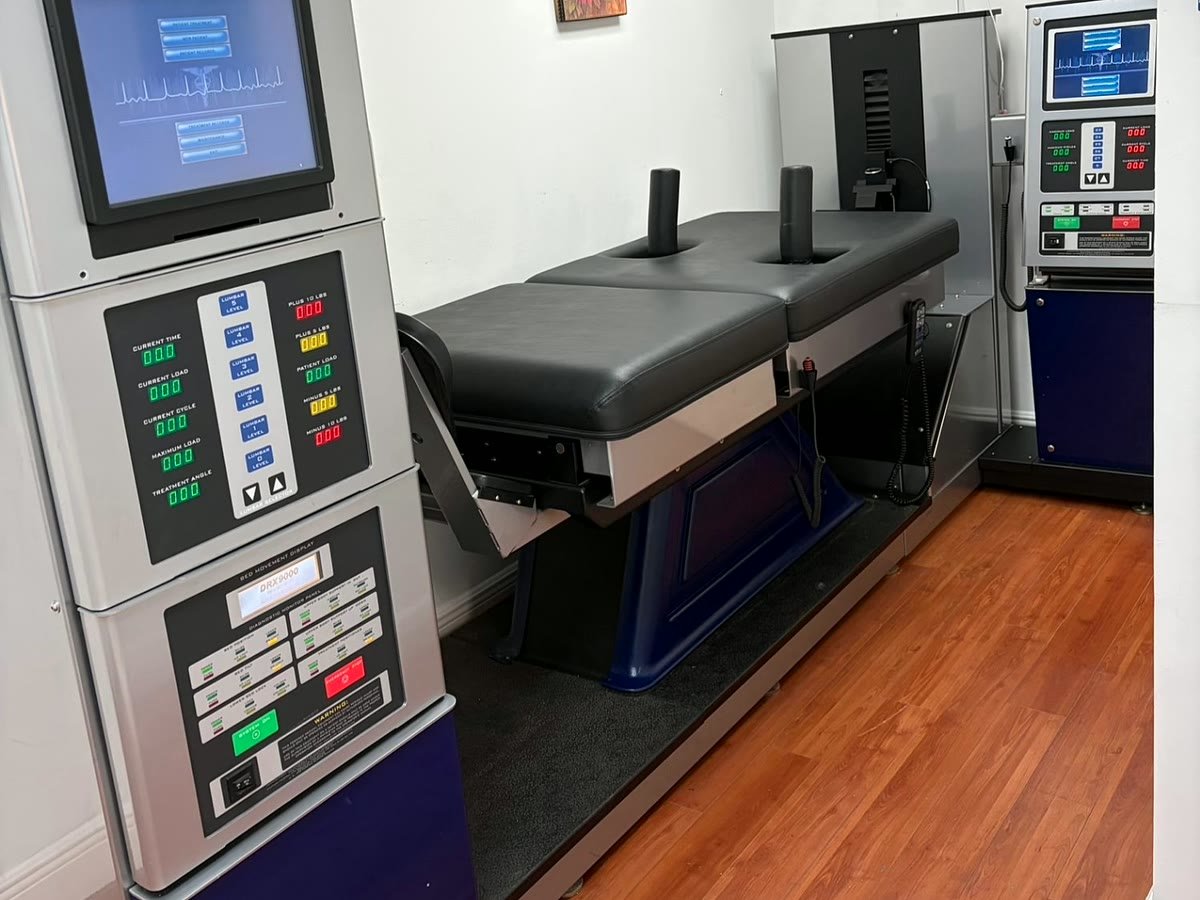
The DRX9000 is an FDA-cleared decompression system for incapacitating low back pain and sciatica (510(k) K060735). You lie face-up on a padded table while the system applies a slow, computer-controlled pull to the targeted level of your lower spine. That can widen the disc space and take pressure off the disc and the nerve, while sensors keep your back muscles relaxed.
There are no needles, no incisions and no recovery period. Each session takes about 30 minutes, and treatment is usually a series of sessions over several weeks.
Read the full DRX9000 decompression guide →
Who may be a candidate
- Back or leg pain that has lasted longer than four weeks.
- An MRI that shows a herniated, bulging or degenerated disc.
- Pain that shoots, burns or tingles down one leg (sciatica).
- Physical therapy, medication or injections have not given lasting relief.
- You have been told surgery is an option and want to explore a non-surgical route first.
Decompression is not for everyone. Fractures, spinal hardware at the level to be treated and pregnancy are among the conditions that can rule it out. The exam at your consult is how we find out.
What happens at your consult
Your consult takes about 45 minutes. Dr. Orlando Armas, DC, reviews your history and any imaging you have, examines your back, and goes over your MRI with you. You get a straight answer: if decompression is a reasonable option for you, you will get a plan with the number of sessions; if it is not, you will hear that too, and why.
Dr. Armas has more than 20 years of chiropractic experience and personal training in spinal disc decompression. Meet Dr. Armas →
Frequently asked questions
Should I cancel my scheduled surgery to try decompression?
Do not cancel or postpone a scheduled surgery without talking to your surgeon. Many patients come for a consult while they are still deciding, and we will tell you honestly whether decompression is reasonable to try in your case.
Does spinal decompression hurt?
Most patients find it comfortable. You feel a gentle, rhythmic stretch in your lower back, and many people read or nap during the session.
How many sessions will I need?
It depends on your condition and how long you have had it. The doctor sets your plan after the exam. Read more about session counts.
Do you take insurance?
We accept cash and commercial insurance. We do not accept Medicare or Medicaid. Call us for pricing and package options.
This page is general information, not medical advice, and does not replace the advice of your own doctor or surgeon. Results vary from person to person, and not everyone is a candidate for spinal decompression.